 Mary
Mary Introduction: AI Is No Longer Coming. It’s Here.
A few years ago, artificial intelligence felt like a concept — something for tech conferences and science fiction. In 2026, it is the most disruptive force in the global economy, and almost no industry has been left untouched.
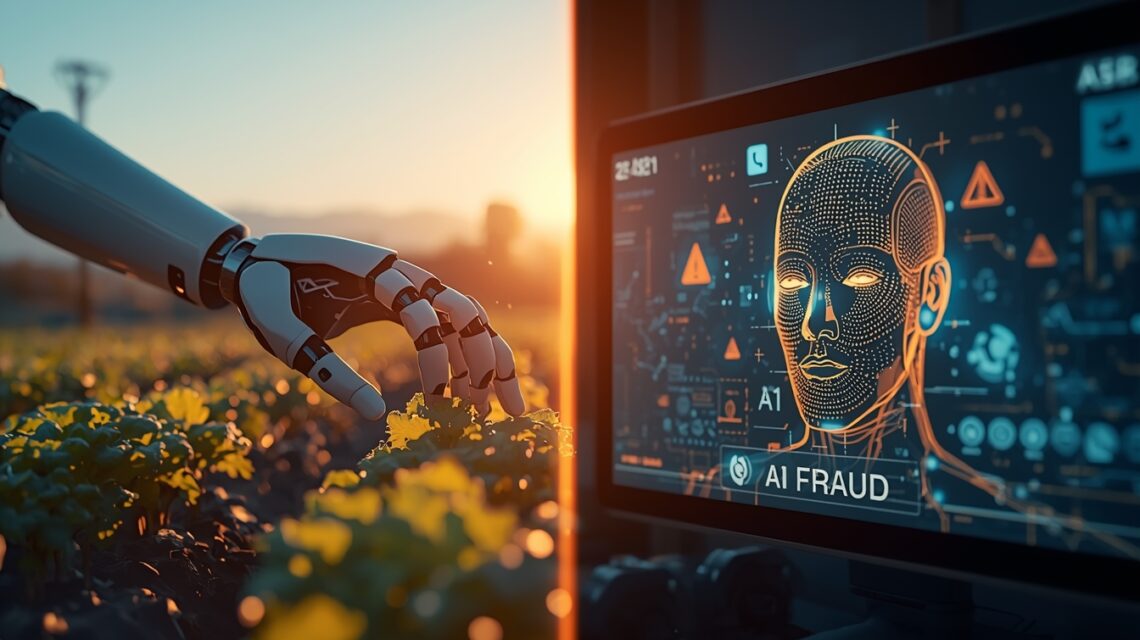
This week alone, major headlines across the US covered AI being used to steal a woman’s entire life savings through sophisticated deepfake manipulation, Meta announcing it would cut 10% of its workforce to fund AI expansion, and a California startup deploying AI robots to harvest crops.
These are not isolated stories. They are symptoms of a transformation that is accelerating faster than most people — or governments — are prepared for.
This post gives you the complete picture: the genuine breakthroughs, the real dangers, and what it all means for you.
The Good: Where AI Is Genuinely Helping
🌾 Revolutionising Agriculture
One of the most compelling stories of 2026 is happening in the fields, not the boardrooms.
A California-based startup called Farm-ng is using AI and robotics to perform tasks including seeding, weeding, and harvesting — addressing both labour shortages and environmental pressures that have long plagued the farming industry.
This isn’t experimental. It’s operational. And it signals a broader truth: AI’s most impactful early use cases may not be in Silicon Valley offices — they may be in the places that feed us.
Why it matters: With global food security under pressure from climate change and shrinking agricultural workforces, AI-powered farming could prove one of the technology’s most vital contributions this decade.
🏥 Healthcare and Life Extension
From diagnostics to drug discovery, AI is accelerating medicine at a pace that once seemed impossible. Researchers are now using machine learning to identify cancer markers years earlier than traditional methods, and AI tools are beginning to assist in personalised treatment planning.
Journalist Kara Swisher’s recent investigation into the booming business of life extension — covered by CNN — highlights how AI is becoming central to the longevity science sector, attracting billions in investment.
⚡ Energy and Climate
AI is being deployed to optimise power grids, improve the efficiency of renewable energy systems, and model climate scenarios with unprecedented accuracy. The energy sector — ironically one of the most disrupted by the Iran conflict — is increasingly looking to AI as part of its long-term resilience strategy.
The Bad: AI as a Weapon Against Ordinary People
Here is where the story gets uncomfortable.
💸 AI-Powered Scams: A Growing Crisis
CBS News recently reported a deeply alarming case: a woman had her entire life savings stolen by scammers who used artificial intelligence to perfectly mimic the voice and appearance of a trusted person in her life. The deception was so sophisticated she had no way to detect it.
This is not a one-off. AI-generated fraud — including deepfake voice calls, fake video messages, and AI-written phishing communications — is now one of the fastest-growing categories of financial crime in the United States.
Protect yourself — key red flags to watch for:
| Red Flag | What to Do |
|---|---|
| Urgent request for money via call or video | Hang up. Call the person directly on a known number. |
| “Verify your identity” requests from unknown sources | Never comply. Contact the institution directly. |
| Familiar voice asking for unusual favours | Use a pre-arranged code word with close family. |
| Emotional pressure to act quickly | Slow down. Scammers rely on urgency. |
🏢 Big Tech Layoffs Funded by AI Investment
Meta’s announcement that it will lay off approximately 10% of its global workforce — to redirect that capital into AI development — is a sign of things to come across the tech industry.
This raises a hard question that economists are only beginning to grapple with: Who benefits when AI replaces human workers? If productivity gains flow exclusively to shareholders and executives, the broader social contract around work and income will face serious strain.
The Complex: AI, Jobs, and the Future of Work
The debate around AI and employment is nuanced — and anyone telling you it’s simple is either uninformed or selling something.
What the Evidence Actually Shows
- Some jobs will be displaced. Roles involving repetitive tasks, data processing, and certain forms of content creation are already seeing significant AI encroachment.
- New jobs are being created. AI infrastructure, model training, safety research, and human-AI collaboration roles are growing fields.
- The transition period is the danger zone. Economies historically manage technological transitions — but the speed of AI adoption may outpace retraining and social support systems.
Which Industries Face the Most Disruption?
Based on current trends and expert analysis, the sectors most exposed to AI-driven transformation in 2026 include:
- Customer service and call centres
- Data entry and administrative roles
- Basic legal and financial research
- Certain categories of journalism and content creation
- Entry-level software development
This doesn’t mean these jobs disappear overnight — but workers in these areas are right to be thinking about skill development and adaptability.
What Governments and Regulators Are Doing (And Not Doing)
The regulatory response to AI has been, to put it charitably, uneven.
The European Union has moved furthest with its AI Act, which classifies AI systems by risk level and imposes corresponding requirements. The United States, by contrast, has taken a more fragmented approach — with different agencies pursuing different rules, and Congress yet to pass comprehensive AI legislation.
The gap between AI capability and regulatory oversight is widening. This is one of the most significant systemic risks of 2026 — not because AI is inherently dangerous, but because absent frameworks create space for bad actors and irresponsible deployment.
What You Should Do Right Now
Whether you’re a business owner, employee, parent, or investor, AI in 2026 demands some deliberate thinking:
For individuals:
- Educate yourself on deepfake and AI scam tactics — forewarned is forearmed.
- Consider whether your current skills are AI-resilient or AI-vulnerable.
- Talk to your family about verification protocols for unusual requests.
For business owners:
- Assess where AI can genuinely improve operations — not just follow trends.
- Invest in staff upskilling alongside any AI adoption.
- Establish clear ethical guidelines for AI use within your organisation.
For investors:
- Look beyond hype cycles to companies with defensible AI-driven moats.
- Note that AI infrastructure (chips, data centres, energy) may offer more stable returns than pure AI software plays.
Final Thoughts: Intelligence Requires Wisdom
Artificial intelligence is the defining technological story of our era. It will produce extraordinary benefits — and, if left unchecked or misused, extraordinary harm.
The difference between those two outcomes isn’t determined by the technology itself. It’s determined by the choices we make — individually, institutionally, and as a society — about how we develop, deploy, and govern it.
The best thing you can do right now? Stay informed. Think critically. And don’t let the pace of change outrun your ability to engage with it.
📌 Key Takeaways:
- AI is already transforming agriculture, healthcare, and energy for the better.
- AI-powered scams are a major and growing threat to ordinary people.
- Major companies like Meta are cutting staff to fund AI expansion.
- Regulatory frameworks are lagging dangerously behind AI capabilities.
- The transition period — not AI itself — is where the greatest risk lies.
