
 Mary
Mary What Is the $250 Bill Proposal?
The $250 bill has suddenly become one of the most talked about topics in American politics and finance. According to multiple reports from The Washington Post and other major outlets, Trump appointees are actively pushing for the creation of a new $250 banknote that would feature the former president’s portrait. This unprecedented move has sent shockwaves through the financial community and sparked intense debate across the political spectrum.

Moreover, this proposal is not just some casual suggestion floating around Washington. It represents a coordinated effort by officials within the administration to fundamentally alter the landscape of American currency. The $250 bill would be the first new denomination introduced in the United States in decades, and the implications of such a move are far reaching and deeply controversial.
Furthermore, the timing of this push raises serious questions about the motivations behind it. In an era where digital payments are becoming increasingly dominant, the introduction of a high denomination physical bill seems counterintuitive to many economists and financial experts. Nevertheless, the proposal continues to gain traction among certain political circles.
History Behind the $250 Bill Concept
To understand why the $250 bill proposal is generating such intense reactions, we need to look at the history of American currency denominations. The United States has previously issued high denomination bills, including $500, $1,000, $5,000, and even $10,000 notes. However, these were discontinued in 1969 due to concerns about their use in illegal activities.
In fact, the decision to eliminate large denomination bills was driven by law enforcement concerns about money laundering and organized crime. For decades, the $100 bill has served as the largest denomination in circulation, and many countries around the world have followed similar approaches to limit the size of their banknotes.
Consequently, the push for a $250 bill represents a reversal of this long standing policy direction. In addition, it raises the question of why this particular denomination was chosen. Some analysts suggest that $250 was selected as a compromise, being large enough to make a statement but not so large as to immediately trigger the same concerns that led to the elimination of $500 bills.
Meanwhile, other countries have been moving in the opposite direction. The European Central Bank stopped producing the 500 euro note in 2019, and many nations are actively reducing their reliance on physical cash altogether. Therefore, the American proposal stands in stark contrast to global trends in currency management.
Shocking Ramifications of the $250 Bill
The potential ramifications of introducing a $250 bill extend far beyond simple monetary policy. First of all, there is the deeply controversial decision to place a living or recently serving president’s face on currency. This breaks with a long standing tradition that has generally reserved such honors for historical figures who have been deceased for a significant period.

Moreover, the legal framework surrounding this proposal is complex and potentially problematic. Reports indicate there is a big catch to the plan, as existing laws may prevent the placement of a living person’s image on US currency. In other words, significant legal hurdles would need to be overcome before any such bill could enter circulation.
For example, federal law currently prohibits the portrayal of living persons on government securities. This means that even if there is political will to create the $250 bill, the legal pathway to doing so remains unclear and would likely face immediate court challenges.
Above all, the precedent this would set is what concerns constitutional scholars the most. If one administration can place its leader’s face on currency, what stops every future administration from doing the same? This could transform American money from a symbol of national unity into a rotating gallery of political figures.
Similarly, the economic ramifications cannot be ignored. Introducing a new denomination requires massive infrastructure changes across the banking system, vending machines, ATMs, and countless other systems that handle physical currency. The cost of implementing these changes would be substantial.
Economic Implications for Everyday Citizens
For ordinary Americans, the $250 bill raises practical concerns that go beyond politics. However, the most immediate question is whether such a bill would actually be useful in daily transactions. In an economy where the average purchase is made with a debit card or smartphone, who would actually use a $250 bill?
Furthermore, businesses would face significant challenges in handling the new denomination. Cash registers would need to be modified, employees would need training on authentication, and the risk of receiving counterfeit bills would increase during the transition period. For instance, small businesses that operate on thin margins could face real financial pressure from these changes.
In addition, there are concerns about the inflationary signal that a high denomination bill might send. While introducing a new bill does not directly cause inflation, it can influence public perception of the value of money. After all, the last time the US introduced higher denomination bills was during a period of significant economic expansion.
Nevertheless, some economists argue that a $250 bill could actually serve a practical purpose. As a result of decades of inflation, the purchasing power of the $100 bill today is equivalent to roughly $20 in 1969 when large bills were eliminated. Therefore, there is a legitimate argument that current denominations have not kept pace with economic reality.
On the other hand, this practical argument is largely undermined by the reality of modern payment systems. Digital transactions now account for the vast majority of purchases, and the trend toward cashless commerce shows no signs of slowing. In short, the practical case for a $250 bill is weak at best.
Consequently, many analysts believe the true motivation behind the $250 bill is political rather than economic. The proposal serves as a powerful symbolic gesture that generates media attention and energizes certain segments of the political base, regardless of whether the bill ever actually enters circulation.
Political Fallout and Public Reaction
The political reaction to the $250 bill proposal has been swift and deeply divided. Moreover, it has become yet another flashpoint in an already polarized political environment. Supporters view it as a fitting tribute to a transformative political figure, while opponents see it as an unprecedented act of self aggrandizement.
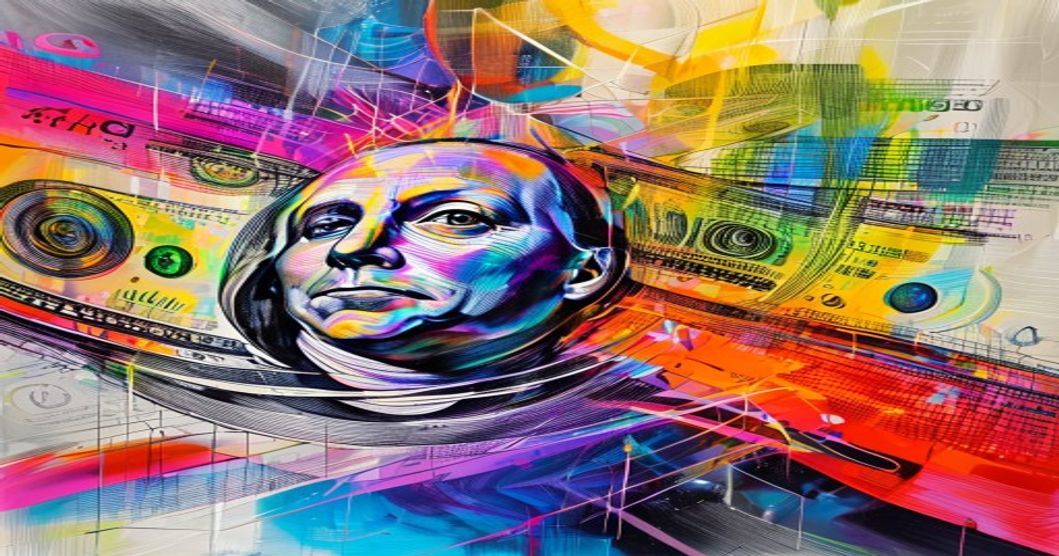
For example, several prominent lawmakers have already announced their intention to block any legislation that would enable the creation of such a bill. In fact, bipartisan opposition has emerged in some quarters, with even some allies expressing discomfort with the idea of placing a contemporary political figure on currency.
Furthermore, public opinion polls suggest that Americans are deeply split on the issue. However, what is notable is that opposition extends beyond typical partisan lines. Many respondents who otherwise support the administration have expressed reservations about this particular proposal, viewing it as a step too far.
Meanwhile, the media coverage of the $250 bill has been intense and largely critical. Major outlets including The Washington Post, The Independent, and the New York Post have all reported on the proposal, with many highlighting the legal and practical obstacles that stand in its way. As a result, the proposal has become one of the most discussed political stories of the moment.
In addition, social media reaction has been explosive, with the topic trending across multiple platforms. The combination of money, politics, and presidential imagery has proven to be an irresistible subject for online commentary and debate. For instance, memes and satirical content about the $250 bill have proliferated rapidly across the internet.
Therefore, regardless of whether the $250 bill ever becomes reality, it has already achieved significant political impact simply by dominating the news cycle and forcing opponents to respond. This may, in fact, be the primary purpose of the proposal in the first place.
Counterfeiting Concerns and Security Challenges
One of the most serious practical concerns surrounding the $250 bill relates to counterfeiting and security. However, this is not simply a matter of designing new security features. The introduction of any new denomination creates a window of vulnerability that counterfeiters could exploit.
First of all, the public would be unfamiliar with the look and feel of the new bill, making it harder for individuals and businesses to identify fakes. Moreover, the security features that protect existing denominations have been refined over decades of experience. A brand new bill would not have the benefit of this iterative improvement process.
In fact, the Secret Service, which is responsible for investigating counterfeiting, has historically opposed the introduction of new denominations precisely because of these security concerns. Furthermore, the higher the denomination, the greater the incentive for counterfeiters to target it. A successful counterfeit $250 bill would yield 2.5 times the profit of a fake $100.
Consequently, the security infrastructure required to protect a $250 bill would need to be state of the art from day one. This means significant investment in new printing technologies, detection equipment, and training programs. In other words, the cost of securing the new denomination would add substantially to the overall expense of the program.
Similarly, international implications must be considered. The US dollar is the world’s reserve currency, and counterfeit American bills circulate globally. Therefore, any new denomination would need to be communicated to and accepted by financial institutions worldwide, adding another layer of complexity to an already challenging undertaking.
Nevertheless, proponents argue that modern security technology is more than capable of protecting a new denomination. They point to recent redesigns of existing bills that have incorporated cutting edge features like color shifting ink, 3D security ribbons, and microprinting that have significantly reduced counterfeiting rates.
Global Perception of US Currency
The $250 bill proposal also raises important questions about how the rest of the world perceives American currency. Above all, the US dollar’s status as the global reserve currency depends on international confidence in American financial institutions and their independence from political influence.
However, placing a political figure’s face on a new denomination could undermine this confidence. For example, central bankers in other countries might view the move as evidence that American monetary policy is becoming politicized. In addition, it could provide ammunition to countries like China and Russia that have been actively working to reduce global dependence on the dollar.
Moreover, the symbolism of the $250 bill extends beyond economics into the realm of international diplomacy. Allied nations might view the move with concern, while adversaries could use it as propaganda to suggest American democratic institutions are weakening. As a result, the foreign policy implications of what might seem like a domestic issue are actually quite significant.
Furthermore, international financial markets could react negatively to any perception that US currency is being used as a political tool. In fact, even the discussion of such a proposal has the potential to influence currency markets and affect the dollar’s exchange rate. Therefore, the mere existence of the debate carries real economic consequences.
On the other hand, some argue that the global financial system is robust enough to absorb this kind of change without significant disruption. They point out that many countries feature contemporary political leaders on their currency without suffering economic consequences. Nevertheless, the unique role of the US dollar in global finance means that comparisons to other nations may not be entirely appropriate.
In short, the international dimension of the $250 bill debate adds yet another layer of complexity to an already multifaceted issue. The decision will ultimately be made domestically, but its effects will be felt around the world.
For more coverage on political developments like the $250 bill controversy, visit our news section for the latest updates and analysis.
Frequently Asked Questions
Is the $250 bill officially approved?
No, the $250 bill has not been officially approved. Currently, it remains a proposal being pushed by certain officials. Moreover, significant legal and legislative hurdles would need to be cleared before any new denomination could enter production. The proposal would likely require Congressional approval and could face court challenges based on existing laws about depicting living persons on currency.
Why was $250 chosen as the denomination?
The specific choice of $250 appears to be a strategic decision. Furthermore, it positions the bill between the existing $100 note and the discontinued $500 bill. In addition, some analysts suggest the denomination was chosen because it is large enough to be notable but not so large as to immediately trigger concerns about facilitating illegal transactions that led to the elimination of $500 bills in 1969.
Would the $250 bill affect inflation?
Introducing a new denomination does not directly cause inflation, as it does not change the money supply. However, economists note that it could influence public perception of monetary policy. Nevertheless, the actual economic impact would depend on how many bills are printed and how they are distributed into the economy. Most experts agree the inflationary risk is minimal compared to other policy decisions.
Can a living president appear on US currency?
Current federal law generally prohibits the depiction of living persons on US government securities and currency. Therefore, placing a living or recently serving president on the $250 bill would likely require either a change in law or a creative legal interpretation. In fact, this legal obstacle is what many reports refer to as the big catch in the proposal.
How would the $250 bill affect businesses?
Businesses would face several practical challenges if the $250 bill entered circulation. For instance, cash registers, safes, and counting machines would need updates. Moreover, employees would require training to authenticate the new denomination. Consequently, small businesses in particular could face meaningful costs during the transition period. ATM networks would also need significant reprogramming.
What are other countries saying about the $250 bill?
International reaction has been mixed but largely cautious. Furthermore, financial analysts in Europe and Asia have expressed concern about the politicization of US currency. As a result, some commentators have suggested it could accelerate efforts by certain nations to develop alternatives to dollar dependence. However, most official government responses have been measured, treating it as an internal American matter.
For more insights on how technology intersects with financial policy, check out our technology coverage. In addition, our entertainment section covers the cultural reactions and viral moments surrounding this debate.
For additional reporting on this story, you can read the detailed coverage from The Washington Post, which first broke many details about the internal push for the new denomination.
